
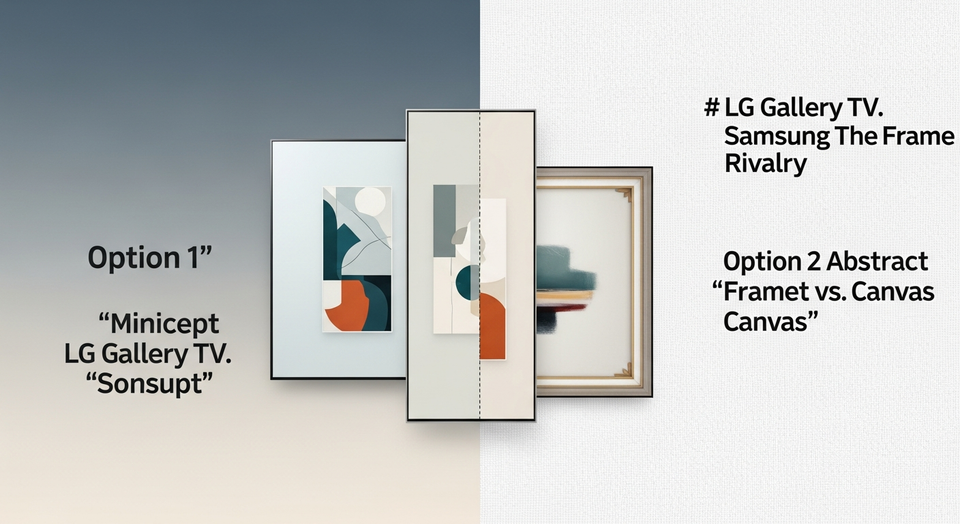
LG is preparing to shake up the “TV as décor” category with a newly announced set called the Gallery TV, positioned as a direct alternative to Samsung’s well-known The Frame. The idea is simple: when you’re not watching shows or playing games, the screen can fade into your living space by displaying artwork and design-forward visuals instead of a blank black rectangle.
LG enters the art-focused TV race
Art-forward televisions have become a distinct segment of the broader TV market, largely popularized by Samsung’s The Frame. Instead of focusing purely on panel specs, these sets emphasize how a television looks on a wall and how it behaves when it’s “off,” often providing a dedicated art mode that turns the screen into a digital canvas.
That concept has attracted increasing competition, including models from Google TV brands like Hisense and TCL. Now LG is joining the same conversation with its own take: the Gallery TV.
What LG’s “Gallery TV” is designed to do
LG’s Gallery TV follows many of the same design principles that made The Frame widely recognizable. The focus is on making the screen appear like part of the wall décor rather than a protruding electronics slab.
A flush-mount look with customizable frames
According to LG, the Gallery TV uses a slim, flush-mount design intended to sit close to the wall. To further sell the “picture frame” illusion, the set supports customizable magnetic frames, letting owners swap the look to better match different rooms or styles.
LG says the Gallery TV will be offered in two sizes: 55-inch and 65-inch models.
Artworks and visuals when you’re not watching TV
At the heart of the lifestyle-TV concept is what happens when the TV is not in active use. Like its main rival, LG’s Gallery TV is built to display artwork and other visuals, effectively turning the screen into a rotating gallery piece rather than leaving it dormant.
LG also notes that the Gallery TV includes internal memory so users can curate and store preferred content locally. Practically, that means you can build a personal collection of images and visuals that can be called up for display without treating the TV like a passive monitor.
Picture and audio: MiniLED and LG’s α (Alpha) 7 AI Processor
While lifestyle TVs are often discussed in terms of aesthetics, LG is also framing the Gallery TV as a premium entertainment display when it’s time to actually watch something.
MiniLED for 4K visuals
LG says the Gallery TV is powered by its MiniLED technology and delivers 4K visuals. MiniLED is typically used to improve contrast and brightness control versus more basic LED backlighting systems, which can matter a lot in bright living rooms where lifestyle TVs are commonly placed.
α (Alpha) 7 AI Processor
LG also highlights its α (Alpha) 7 AI Processor as a key part of the package. Processors in modern TVs generally handle upscaling, image processing, motion handling, and other optimizations that affect day-to-day viewing—particularly when you’re watching content that isn’t native 4K.
AI Sound Pro with Virtual 9.1.2ch
On the audio side, LG says the Gallery TV includes AI Sound Pro (Virtual 9.1.2ch). Virtual surround processing aims to simulate a more immersive soundstage without requiring a full physical speaker setup around the room.
LG Gallery+ brings a large art library to the screen
The content layer is a crucial part of any art-focused TV, and LG is pairing the Gallery TV with a service called LG Gallery+. The service is positioned as more than a simple slideshow tool; LG describes it as an “interior platform” meant to help screens function as adaptable interior elements.
Over 4,500 works, refreshed monthly
LG says the LG Gallery+ library includes over 4,500 works that are refreshed monthly. The idea is to keep the selection from feeling stale, encouraging owners to rotate visuals over time and match the screen to seasons, mood, or interior changes.
From fine art to animations and game visuals
Beyond traditional art, LG states that the library spans a wide range of categories, including fine art, cinematic scenes, game visuals, and animations. That broader scope matters because many people want the “ambient display” experience without limiting themselves to classic artwork styles. A living room might call for fine art, while a game room or office could feel more natural with animated or stylized visuals.
LG’s official announcement provides more detail about the Gallery TV and LG Gallery+ here.
How Gallery TV compares to Samsung’s The Frame (in concept)
LG is clearly targeting the same buyer who might otherwise choose Samsung’s The Frame. While LG has not yet shared every specification detail, the overarching approach mirrors what shoppers expect from this segment:
- Wall-friendly presentation: A slim, flush-mount design intended to look more like décor.
- Frame-like customization: Magnetic frames that can change the TV’s look.
- Art display mode: Visual content that can be shown when the TV isn’t actively being used for viewing.
- A curated library: Access to a large catalog of artwork and visuals via LG Gallery+.
For consumers, the difference may ultimately come down to design preferences, pricing, ecosystem fit, and how each company’s art library and presentation options feel in everyday use.
CES 2026: what we know about timing so far
LG plans to showcase the Gallery TV at CES 2026 next week, giving attendees and media a first real look at how the hardware sits on a wall, how the magnetic frames work, and what the art experience looks like in practice.
However, LG has not yet announced pricing or an exact release date. Those details will likely shape how aggressively the Gallery TV can compete in a category where style is important, but cost still heavily influences buying decisions.
What to watch for next
As LG brings the Gallery TV to CES 2026, a few practical questions will help determine how compelling it is for buyers who want a TV that blends into their home:
- Price positioning: Whether LG aims for a premium tier, competitive midrange pricing, or multiple configurations.
- Real-world wall fit: How flush the TV looks in typical installations and what mounting options are supported.
- Art mode usability: How quickly the TV transitions between entertainment and artwork, and how customizable the display experience is.
- Gallery+ experience: How the 4,500+ works are curated, browsed, and refreshed, and how the service fits into a daily routine.
Conclusion
LG’s new Gallery TV is a clear bid to compete head-to-head with Samsung’s The Frame by combining a flush-mount, frame-ready design with MiniLED 4K performance and a large, regularly refreshed art library through LG Gallery+. With CES 2026 demonstrations imminent—but pricing and availability still unannounced—the next updates will be key in deciding whether LG can meaningfully disrupt this style-first TV niche.
Attribution: This article is based on reporting originally published by 9to5google.com.
Related Articles
- Samsung Galaxy S26 Ultra: Expected Upgrades, Specs Rumors, and Possible Launch Window
- Samsung Will Add Google Photos to Its TVs in 2026, Starting With Memories
- Chrome for Android Reading Mode Redesign Rolls Out With Easier Access and a Material 3 Look
Based on reporting originally published by 9to5google.com. See the sources section below.
Sources
- 9to5google.com
- https://www.lg.com/global/newsroom/news/media-entertainment-solution/lg-electronics-expands-its-lifestyle-tv-lineup-with-the-new-art-inspired-gallery-tv/
- https://twitter.com/NexusBen
- https://www.threads.net/@nexusben
- https://bsky.app/profile/nexusben.com
- https://www.instagram.com/nexusben