Sauron, a high-end home security startup built for “super premium” customers, has a new CEO—and a much longer runway before its first full system reaches homes.
The company was founded after Kevin Hartz experienced a late-night scare in San Francisco: an intruder rang his doorbell and attempted to enter, yet his security system didn’t alert him. Co-founder Jack Abraham had faced similar issues at his Miami Beach residence, reinforcing their belief that existing solutions weren’t reliable enough for customers who want stronger deterrence and fewer failures.
Launched in 2024, Sauron is named after the all-seeing eye from “The Lord of the Rings,” a deliberate nod to always-on awareness. The idea found an audience among tech elites, particularly in the Bay Area, where crime remained a frequent conversation during and after the pandemic—even as San Francisco Police Department statistics showed property crime and homicide rates declining last year.
New CEO: Maxime “Max” Bouvat-Merlin joins from Sonos
Maxime “Max” Bouvat-Merlin, who spent nearly nine years at Sonos and served as chief product officer, took over as Sauron’s CEO last month. In an interview with TechCrunch, he acknowledged what many startups ultimately face between an ambitious unveiling and a finished product: Sauron is still deep in development.
His early priorities are unusually foundational for a company that previously signaled a near-term launch. He is working through core decisions such as which sensors will ship in the first deployments, how the deterrence features will operate in practice, and what timeline is realistic for installing systems in customer homes.
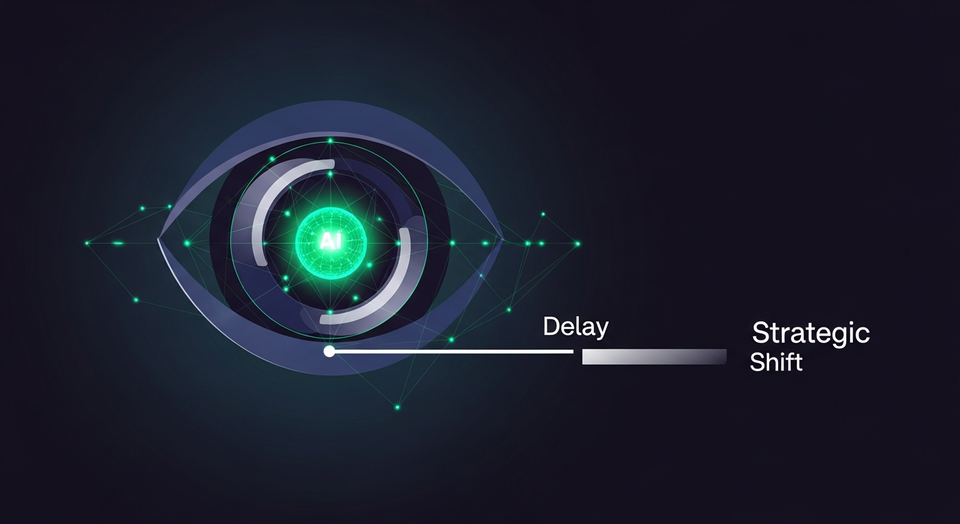
On timing, he offered the clearest update yet: Sauron’s first customer deployments are now expected later in 2026 at the earliest, which represents a significant delay from the company’s earlier target of launching in the first quarter of 2025.
Rather than attempting an all-at-once release, Bouvat-Merlin described a phased rollout, with separate pieces—its concierge service, AI software running on servers, and smart cameras—coming together progressively under a newly defined plan.
Sauron’s funding and original promise
Sauron previously raised $18 million from a mix of investors and industry backers, including executives behind Flock Safety and Palantir; defense tech investors including 8VC; Abraham’s startup lab Atomic; and Hartz’s investment firm A*. The company emerged from stealth exactly a year ago with a bold pitch: a military-grade home security system aimed at demanding customers and powered by AI-driven intelligence, advanced sensors like LiDAR and thermal imaging, and 24/7 human monitoring by former military and law enforcement personnel.
That combination—sophisticated hardware, always-on software, and human operators—remains the north star. But the product details and delivery schedule are now being refined under new leadership.
Why a Sonos veteran sees a familiar playbook
Bouvat-Merlin argues that despite the category shift—from audio to security—Sauron shares key DNA with Sonos. Both companies, in his view, prioritize affluent early adopters, rely heavily on word-of-mouth, and must tightly integrate hardware and software to deliver a premium experience.
He also pointed to the similarity in early strategic dilemmas that shape product and go-to-market execution, such as:
- Whether to start with super-premium customers or “mass premium” buyers
- Whether installation should be professional or do-it-yourself
- How much to build internally versus partnering into an ecosystem
He noted that Sauron may choose different answers than Sonos did, but the underlying questions are comparable.
The security problem Sauron wants to solve
Beyond the market opportunity, Bouvat-Merlin said he was pulled in by the mission and the possibility of solving a concrete customer pain point. He emphasized deterrence—intervening before an incident escalates—as a major focus, describing it as an effort to change someone’s mind “before they make a bad decision and get into trouble.”
He also pointed to dissatisfaction with current premium security offerings. According to his assessment, market leaders in premium home security hold small market shares and have negative Net Promoter Scores, suggesting many customers don’t feel existing systems deliver the reliability or experience they expect at the high end.
A major driver of dissatisfaction, he said, is false positives. Too many erroneous alerts can degrade response behavior over time—especially if law enforcement assumes alarms are likely to be false.
Sauron’s initial target is customers “where safety and security is a major concern,” including people like Hartz. The intended arc is to establish credibility with the most demanding clients first, then expand over time to “mass premium,” as Bouvat-Merlin describes it.
What Sauron is building—and what’s still undecided
Sauron’s product concept is ambitious, but still evolving. At its core is a set of “camera pods” that combine many cameras with multiple sensor types. Bouvat-Merlin described pods that could include “40 cameras and different types of sensors,” potentially incorporating LiDAR and radar, and potentially thermal capabilities as well.
Those sensor pods would connect to servers running machine learning software for computer vision, and the whole system would be tied to a 24/7 concierge service staffed by former military and law enforcement personnel.
That human layer is positioned not only as a response function, but also as a way to improve the system over time. Bouvat-Merlin said these staffers “understand patterns” and can help train the machine learning models to spot unusual behavior—an approach meant to reduce noise while improving the detection of genuine threats.
Deterrence: start before someone enters the property
Deterrence is central to Sauron’s pitch, but the specific mechanism is still being evaluated. Bouvat-Merlin said options could include loudspeakers, flashing lights, and other interventions.
More important than any single device, he argued, is the idea that deterrence should happen early—before a person is inside a home or even on the doorstep. He outlined scenarios such as detecting when a home may be under surveillance, noticing cars circling a neighborhood multiple times, and identifying possible threats across different stages.
What about drones?
Sauron previously drew attention for mentioning drones when it revealed its plans last year. Bouvat-Merlin didn’t provide new specifics, describing drones as part of broader roadmap discussions. He cautioned that Sauron is still a small company, and said the bigger strategy is to expand capabilities through partnerships rather than trying to build everything from scratch.
Timeline, headcount, and a planned Series A
Sauron currently has fewer than 40 employees. The company plans to add only 10 to 12 more hires in 2026, suggesting a deliberate pace as it refines product decisions and operational execution.
It also expects to begin working with early adopters later in 2026. In addition, the company is planning a Series A fundraise for mid-year. Bouvat-Merlin framed that round as optional rather than urgent, emphasizing he wants to raise based on progress and a clear case for how additional funding would accelerate growth—specifically to launch the first end-to-end product, drive customer adoption, and move faster on the roadmap.
He said Sauron has already built a sizable list of prospective clients, crediting groundwork done by the company’s three founders, including roboticist and engineer Vasumathi Raman. Early growth is expected to come largely via word-of-mouth, with broader scaling approaches introduced over time.
Even with interest building, Bouvat-Merlin stressed caution: he wants Sauron to grow sustainably, preserve premium service, manage “growing pains,” and work toward profitability.
Privacy and the “surveillance state” question
A system built on extensive sensing, computer vision, and always-on monitoring inevitably raises privacy questions—especially where facial recognition or identity detection could be involved.
Bouvat-Merlin described an approach centered on homeowner-controlled trust groups. In that model, a homeowner grants access to specific people; when the system detects a trusted person arriving, that individual is recognized as allowed, while everyone else remains “unknown.”
The company is also considering license plate detection, particularly for identifying vehicles that circle neighborhoods multiple times. Bouvat-Merlin tied this back to Sauron’s human concierge layer, suggesting former military and law enforcement staff could help improve the machine learning system’s ability to interpret patterns and assess whether behavior indicates a credible threat.
Why now: rising anxiety among wealthy homeowners
Sauron is entering the market amid heightened concern among wealthy individuals about being targeted. TechCrunch’s report cited a particularly alarming example: a November armed robbery at the San Francisco Mission District home of tech investors Lachy Groom and Joshua Buckley, where $11 million in cryptocurrency was stolen during a 90-minute ordeal involving torture and threats.
Bouvat-Merlin said Sauron is seeing anxiety from prospective clients who are eager to secure their homes, pointing to robberies in San Francisco and other major U.S. cities, including incidents involving firearms. He also suggested broader economic disparities may be contributing to risk perceptions among people at the top end of the wealth spectrum.
What Sauron still has to figure out
Despite the funding, the attention, and the high-profile positioning, Sauron’s operational reality is that several key pieces remain unsettled. The company still needs to finalize sensor configurations and decide manufacturing locations. Bouvat-Merlin floated a potential approach of starting in the U.S. for proximity and control, then moving to more affordable locations as volumes increase.
Sauron also has to ensure its service model works across very different home environments—from estates with large perimeters to dense urban residences—while maintaining the premium standard it’s selling.
For now, Bouvat-Merlin says his focus is on listening, building trust internally, and locking down the strategy now being put in place. The company expects to share more product details later next year.
Conclusion
Sauron is betting that affluent customers will pay for a security system that blends advanced sensors, AI-powered detection, and a 24/7 human concierge—while emphasizing deterrence before incidents escalate. With a new CEO from Sonos and a revised timeline that pushes early deployments to later in 2026, the company’s next challenge is turning a high-concept vision into a deployable, scalable product without compromising the premium experience.
This article is based on reporting originally published by TechCrunch.
<<>>
Related Articles
- Samsung Will Add Google Photos to Its TVs in 2026, Starting With Memories
- Targeted by Government Spyware? What to Do After an Apple, Google, or WhatsApp Warning
- VCs Say 2026 Will Finally Be the Breakout Year for Enterprise AI Adoption—Here’s What They Think Will Change
Based on reporting originally published by TechCrunch. See the sources section below.